





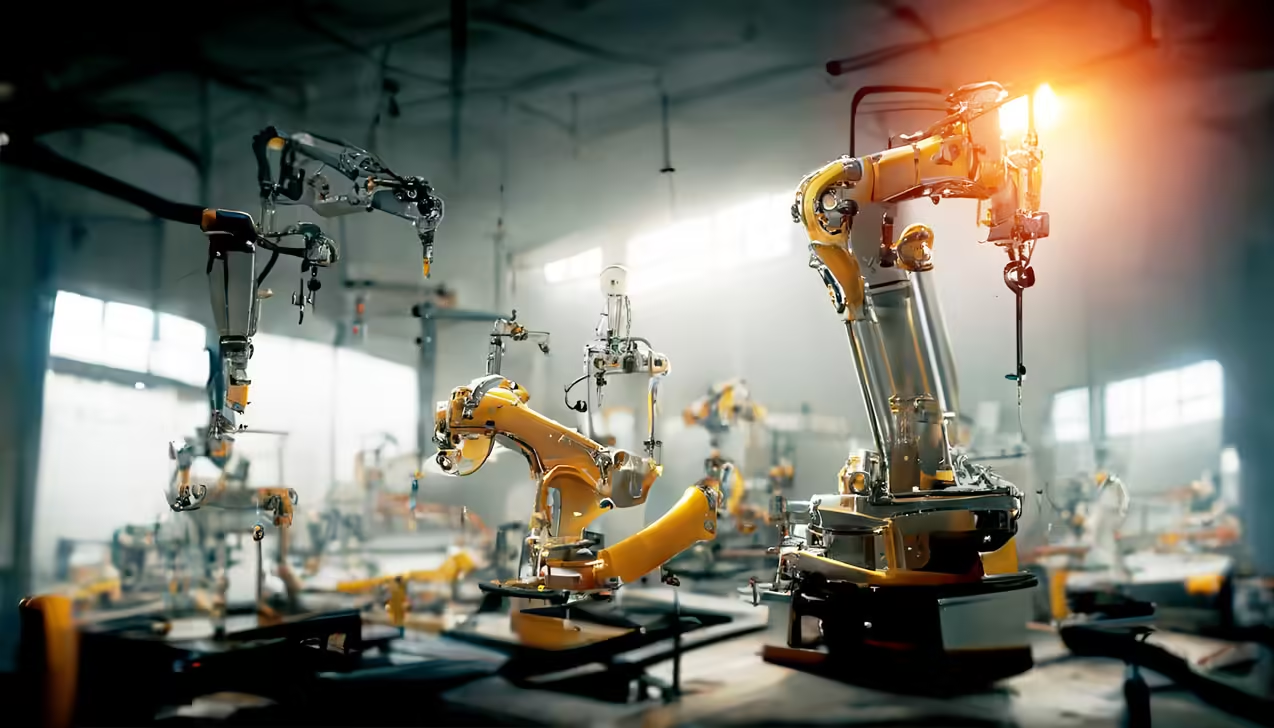

In the face of the ever-advancing industrial revolution, we are witnessing a transformation taking place before our eyes. Production automation and robotization are no longer futuristic concepts, but a reality in modern factories and production plants. These technologies are becoming the foundation of modern production, enabling companies not only to survive but also to thrive in a dynamically changing world.
The importance of automation and robotics in increasing production efficiency cannot be overstated. They accelerate production processes, reduce errors and defects, and significantly lower operating costs. Furthermore, automation allows for flexible responses to changing market conditions and consumer expectations. It also offers the ability to quickly adapt production lines to new tasks.
Robotization, as an integral part of automation, introduces elements like industrial robots into production. They can perform repetitive tasks with greater precision and at a faster pace than human hands. This not only translates into efficiency but also occupational safety, as robots can take on the most dangerous and monotonous tasks.
Introducing these technologies into production facilities is crucial to remaining competitive in an increasingly global and demanding market. Companies that invest in automation and robotics gain a competitive advantage through their ability to quickly adapt to changing market needs and offer high-quality products at lower production costs.
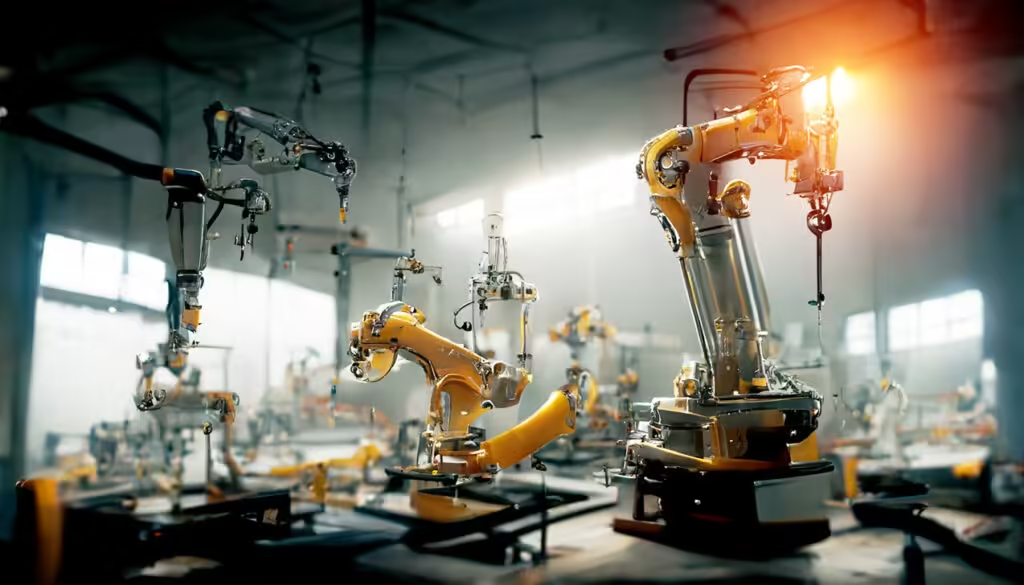
Welding cell
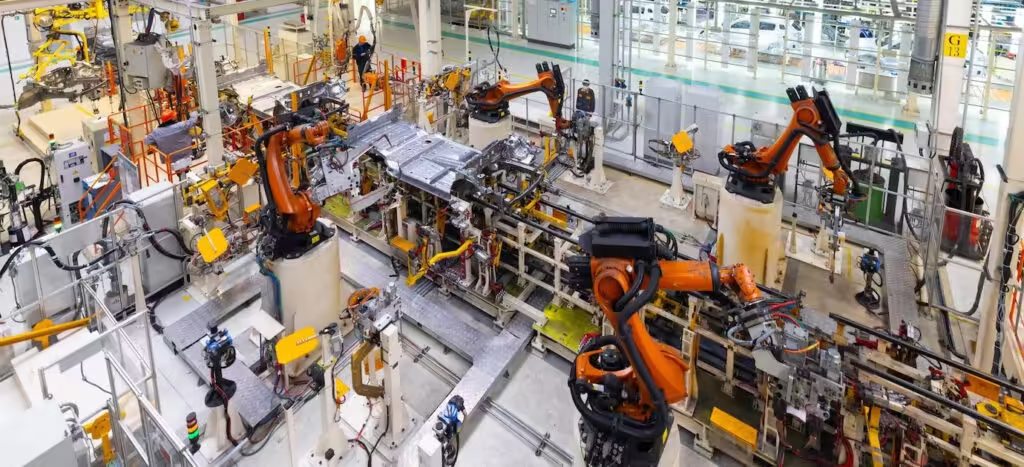
The welding process is an essential part of many industrial sectors, from automotive to construction. Currently, traditional welding methods are giving way to robotic welding cells. These advanced systems use robots to perform welds, achieving greater accuracy and significantly accelerating the production process.
Welding robots operate with a precision unattainable by traditional methods. They eliminate human error, ensuring consistent quality and strength of welds. This is especially important in mass production, where each component must meet uniform, rigorous standards.
Robotic welding cells They are used in various industries. In the automotive industry, they are crucial for welding bodywork components. In construction, they ensure the strength of steel structures, which is essential for safety. In household appliance production, where aesthetics are paramount, robots guarantee the perfect appearance of welds.
Robotic welding cells make production more efficient. Costs are reduced, and product quality is improved. This is a significant step towards a future where automation will be the norm in all aspects of industrial production.
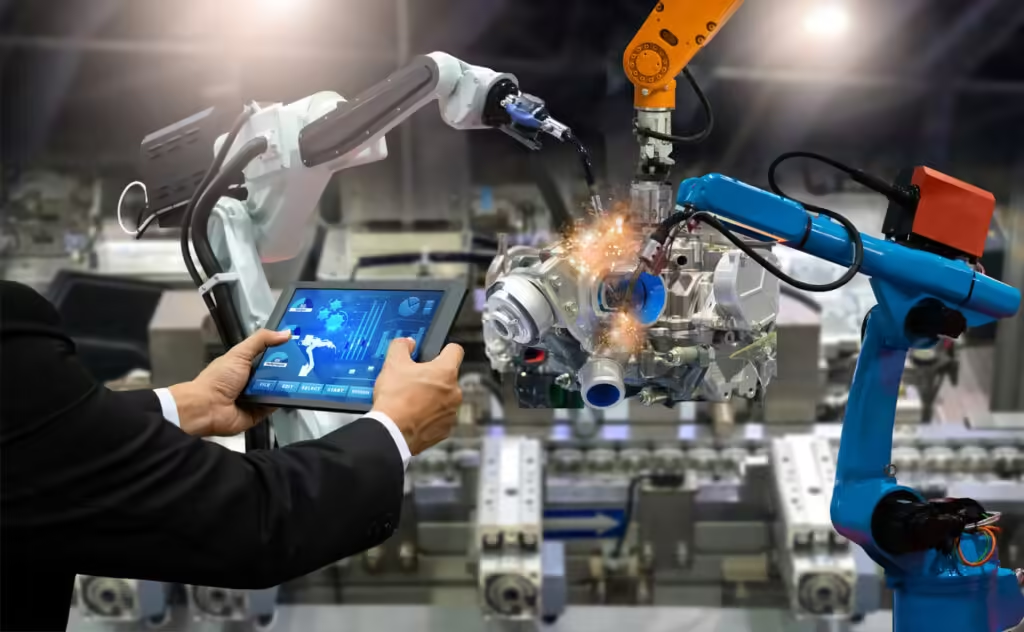
Automation integrator
Automation integrator is not just a technology supplier, but above all, a consultant and contractor who combines engineering knowledge with experience in designing automation systems. Their role begins at the concept stage, where they are able to propose personalized solutions through in-depth analysis of the client's production processes. Automation integrators are specialists in their field who can integrate various components into a coherent and effective automation system.
Automation systems integration process requires not only specialized technical knowledge, but also project management skills. Integrators They must coordinate the work of numerous subcontractors, component suppliers, and engineering teams to ensure that all system elements work together flawlessly. They are responsible for ensuring that the final product meets all the client's technical and business requirements.
Design of automation systems This is another key aspect of an integrator's work. They design machine operation diagrams, create software, and ensure that all system components are properly configured. This ensures that automation systems are not only efficient but also flexible and user-friendly for operators.
Automation integrators They also play a significant role in optimizing production costs. By automating processes that traditionally required manual labor, they significantly reduce labor costs. Furthermore, by increasing efficiency and reducing downtime, they minimize material and energy waste. As a result, companies can offer their products at competitive prices while maintaining high quality and profit margins.
Collaborating with an experienced automation integrator is therefore crucial to the success of automation system implementation. This partner not only provides the technology but also ensures that the investment will deliver the expected benefits and allow the company to achieve a long-term competitive advantage in the market.
Robotic palletizing
Palletizing, the process of stacking goods on pallets for transport or storage, plays a crucial role in efficient supply chain management. In the age of automation, palletizing robots transform this process from a manual, time-consuming task into a fast, precise, and cost-effective operation. Automating palletizing not only increases workflow but also minimizes the risk of errors and product damage that can occur during manual stacking.
The introduction of modern technologies into the palletizing process allows for the optimization of warehouse and transport space. Robots can stack products with maximum efficiency, which translates into reduced logistics costs. Furthermore, advanced palletizing systems can be quickly reprogrammed to handle different types of goods and stacking patterns, providing flexibility in adapting to changing market needs.
Palletizing automation It also has a positive impact on employee safety. Moving heavy loads is a major source of workplace injuries. Robots take over these tasks, reducing the risk of accidents and related costs. This frees up workers to focus on more complex and less monotonous tasks, resulting in greater job satisfaction and productivity.
The use of modern palletizing technologies is therefore not only a matter of efficiency but also a strategic choice. It impacts the entire logistics operations of a company. Companies that invest in automated palletizing systems gain a significant competitive advantage while improving the quality of their logistics services and customer satisfaction.
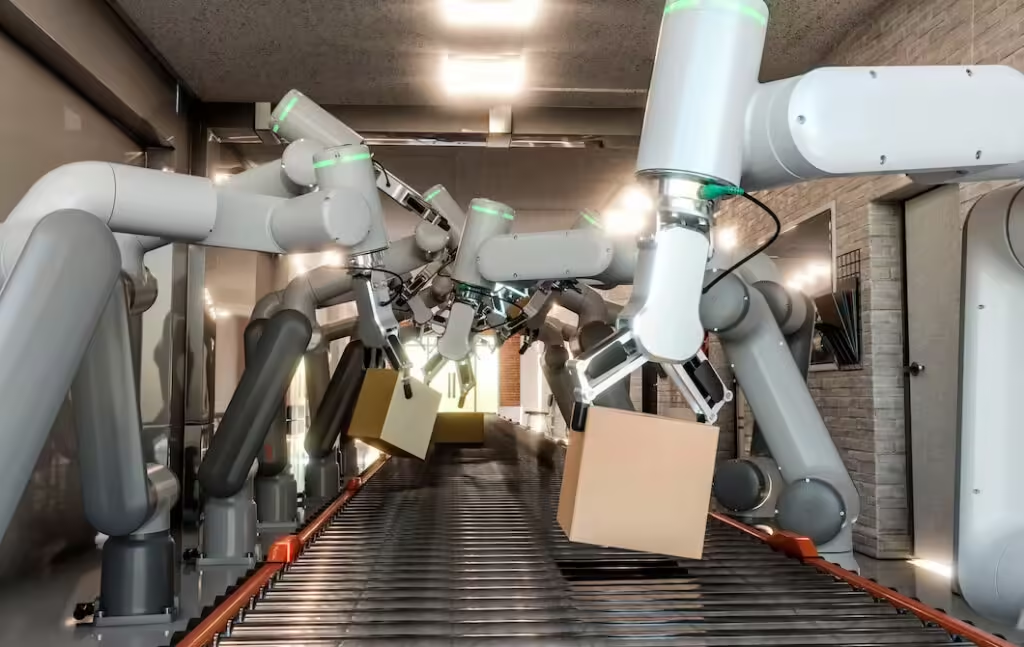
Design of automation systems
Designing automation systems is a process that requires not only deep technical knowledge but also strategic thinking. This is the stage where engineers and technicians must anticipate all possible machine usage scenarios and plan how the system will respond to various production conditions. Careful design is fundamental to the success of any automation system. It is during this phase that all key parameters are determined, which will impact the efficiency and reliability of the entire system.
The design stages of automation systems include analyzing production needs, selecting appropriate components, creating machine operation diagrams, and programming and testing. Each of these stages is equally important and requires detailed attention. For example, the appropriate selection of components determines the system's efficiency and fault tolerance. Programming and testing, in turn, ensure that all components work as intended, and that the system is stable and safe to use.
Good design influences the ultimate success of an automation system implementation. Systems are designed with a specific application in mind. Furthermore, tailored to specific operating conditions, they can significantly increase productivity, reduce downtime, and lower operating costs. Furthermore, well-designed systems are easier to operate and maintain, translating into long-term benefits for the company.
Collaborating with experienced automation system designers is crucial to ensuring that your automation investment delivers the expected results. Professional design encompasses more than just technology; it also encompasses understanding the client's business processes. This allows us to create a system that supports the client's strategic goals. This allows companies to not only improve their production efficiency but also gain new opportunities for development and innovation.
AKPiA – Control, Measurement and Automation Equipment
AKPiA, i.e. Control, Measurement and Automation Equipment, is the foundation of an efficient and modern industry. It is a field that combines advanced measurement technologies with automatic control systems. This allows for the precise monitoring and regulation of industrial processes. Thanks to I&C, it is possible to continuously monitor the operating parameters of machines and devices. This is crucial for maintaining their optimal efficiency and reliability.
Control and measurement equipment encompasses a wide range of devices, such as sensors, transducers, meters, and regulators, which collect data on the technical condition of machines and the quality and quantity of manufactured goods. Industrial automation uses this information to automatically adjust processes, minimizing the risk of errors and downtime, and increasing operational safety.
Implementation of I&C systems It allows for the optimization of production costs by increasing energy efficiency, reducing raw material consumption, and shortening production times. This is particularly important in the context of increasing competition and the need to quickly respond to changing market conditions.
Instrumentation and Control Engineering (I&C) specialists are invaluable partners in the modernization of industrial plants. Their knowledge and experience in the latest measurement and control technologies are essential for designing, implementing, and maintaining the systems that are at the heart of smart manufacturing. Thanks to their work, companies can not only increase their operational efficiency but also raise quality and environmental standards, which is equally important these days.
ROBOTICATION: automation of industrial processes
Robotization is a trend that is decisively changing the face of modern manufacturing. It is defined as the widespread use of robots to automate production processes. Industrial robots are now an integral part of many industries. Their roles range from simple tasks, such as material handling, to complex operations, including CNC machining, assembly, welding, and quality control.
The use of robots in production brings numerous benefits. One of the most important is increased process efficiency. Robots work faster and can operate without interruption, significantly accelerating production and enabling the fulfillment of larger order volumes. Furthermore, robots are characterized by high precision, which translates into improved product quality and minimizes waste.
Occupational safety is another area where robotization brings significant benefits. Robots can take on tasks that are dangerous for employees, particularly those involving working in high temperatures and handling heavy or sharp objects, reducing the risk of accidents and injuries. This also allows employees to focus on more intellectually demanding tasks, where the human factor is essential.
Cost reduction is another key argument in favor of robotization. While the initial investment in industrial robots can be significant, it translates into long-term savings. Robots reduce labor costs and also reduce material and energy waste, which benefits both financially and ecologically.
Robotics isn't just the future—it's already a reality, shaping the modern manufacturing environment. Companies that invest in robots gain a competitive advantage, becoming leaders in innovation and efficiency. As these technologies continue to develop, we can expect their presence in industry to become even more widespread.
To sum up…
Based on information collected from the website PiA-ZAP Puławy, we can see that automation not only increases production efficiency and productivity but also improves product quality and ensures greater occupational safety. Despite implementation challenges, such as the need for proper planning and system design, staff training, and equipment maintenance, the benefits of robotics are significant. Further technological development in this field holds great potential, potentially bringing even greater changes to the future of industrial production.

Część cyklu: Top 5 Digital Marketing Trends for 2025