




In an era of growing market competition and the growing role of the internet in the daily functioning of companies, many companies are seeking professional support to effectively establish an online presence. One of the most popular forms of such support is interactive agency, which combines advertising, marketing, and IT expertise to provide comprehensive customer service. The following article outlines what interactive agencies do, their advantages over other forms of collaboration, and when to consider them. We will also discuss SEO and advertising agencies, explaining how they differ from interactive agencies.

What is an interactive agency?
The interactive agency was created as a result of the natural evolution of traditional advertising agencies and IT companies that began to work together in the field of online brand promotion. The main goal of interactive agencies is expansion of marketing and image activities digital channels such as websites, social media, and mobile applications. It is this integration of specialized knowledge from various fields—from graphic design and programming to SEO optimization—that allows an interactive agency to offer a wide range of services in one place.
The key to modern communication
Modern consumers increasingly seek information online, making the internet a key point of contact for companies and their audiences. An interactive agency helps them fully utilize this potential: from creating an attractive website, through developing marketing strategies, to maintaining ongoing customer contact via social media and newsletters.
Versatility and flexibility
Many interactive agencies rely on a "tailor-made" model, which focuses on tailoring their offerings to the needs of a specific business. Whether a company is a small local shop or a large international corporation, an interactive agency selects a strategy, budget, and promotional channels that align with the client's expectations and goals. This flexibility allows for increased effectiveness of marketing activities and the development of long-term relationships.
What services does an interactive agency offer?
While the scope of services provided can be broad and may vary depending on the specific agency, in most cases, several key pillars of activity can be identified. Their common denominator is comprehensive company support in the online world, which translates into building a coherent image, effective marketing and increased sales.
1. Creating websites and online stores
Designing websites and web applications
One of the core activities of interactive agencies is website design and implementation. IT specialists (such as web developers) handle technical and functional aspects, front-end and back-end programmers develop the code, and UX and UI designers focus on the intuitiveness and aesthetics of the interface. The result is a cohesive, attractive, and functional website that meets the expectations of its audience.
Comprehensive creation of online stores
In this era of rapid e-commerce growth, simply having an online store often becomes a key element of a sales strategy. Interactive agencies design modern e-stores (e.g., based on WordPress/WooCommerce, PrestaShop, or Magento) and integrate them with payment systems, databases, and CRM. This allows customers to seamlessly purchase their chosen product, while businesses gain transparent insight into orders and inventory.
2. Online Marketing
SEO and SEM
Among the most popular marketing activities offered by interactive agencies are: SEO (Search Engine Optimization) i SEM (Search Engine Marketing).
- SEO focuses on positioning websites in organic search engine results (e.g. Google), which means optimizing the content, code, and structure of the website.
- SEM, in turn, is based on paid advertising campaigns, such as Google Ads, which immediately increase a website's visibility in search results.
Social media campaigns
Another pillar of interactive agencies' operations is managing campaigns and brand profiles on social media. Social Media Managers ensure attractive presentation of the offer, interaction with users, and the company's image on platforms such as Facebook, Instagram, LinkedIn, and TikTok. A well-designed social media strategy can translate into building a community around the brand and strengthening customer loyalty.
Content marketing and word-of-mouth marketing
Compelling content attracts audience attention and can significantly impact a website's SEO. Copywriters at an interactive agency create blog articles, product descriptions, e-books, and expert content, which can then be published on the company blog or external websites. At the same time, word-of-mouth marketing is conducted, involving posting recommendations and reviews on discussion forums and social media, strengthening the brand's image and encouraging customers to use its services.
3. Branding and visual creation
Logo and visual identity design
Interactive agencies often offer cohesive visual identity design, including logos, graphic materials, and website layouts. A well-chosen color palette, unique symbols, and a professional logo serve as a company's calling card, contributing to brand recognition.
UI/UX design
UI (User Interface) and UX (User Experience) specialists not only ensure the website's visual appearance, but also ensure the interface's ergonomics and intuitive navigation. The goal is to create an environment in which users can quickly find the information they need, easily add products to their cart, and enjoy using the site in the future.
4. Hosting, technical support and website maintenance
Security and updates
An interactive agency often handles hosting duties—providing server space, monitoring website performance and speed, and handling technical updates. This directly impacts website security (e.g., SSL certificates) and user accessibility.
Ongoing cooperation and project development
Customers can count on ongoing support in creating new modules, modifying functionality, and developing the website. Should a failure occur or changes to the store's structure be necessary, an entire team of specialists is ready to respond.
SEO agency and interactive agency
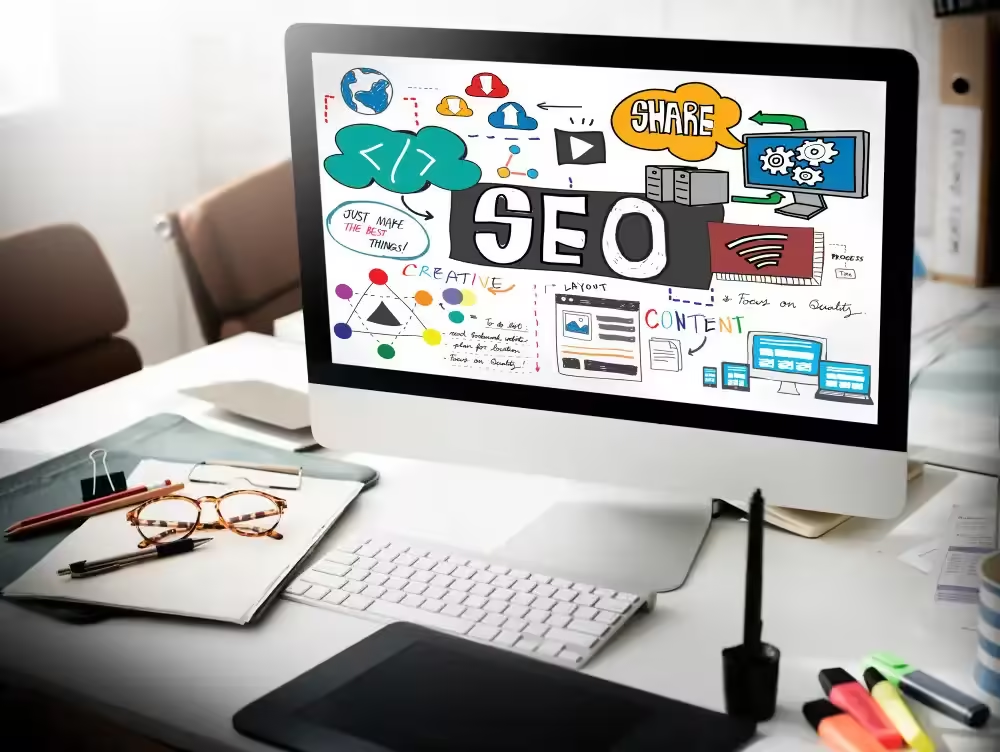
Many people look for a division into SEO, marketing, and interactive agencies. What is an SEO agency?? This entity primarily focuses on website positioning in search engines, with a particular emphasis on Google. Its goal is to obtain the highest possible organic traffic, meaning traffic that doesn't result from paid advertising but is based on natural search results. An SEO agency can perform:
- SEO audit – website diagnostics for search engine optimization.
- Optimization of content, code and meta tags – to improve visibility in search results.
- Link-building and word-of-mouth marketing – acquiring quality links, creating opinions and recommendations.
- Position monitoring – analysis of effects and implementation of further improvements.
Scope of SEO agency activities
A strictly specialized SEO agency often doesn't offer comprehensive website building, graphic design, or social media campaign management services. Instead, specialized activities aimed at boosting a website's rankings in Google are essential. An interactive agency, on the other hand, may have an SEO team that not only provides SEO but also integrates these activities into a broader promotional strategy (e.g., combining them with social media marketing or web application design).
When should you choose an SEO agency and when should you choose an interactive agency?
- SEO agency is a solution for those who already have a functioning website and only want to improve its position in search results, increasing organic traffic.
- Interactive agency it will work when we need full service – from creating a website from scratch, through image and marketing implementation, to ongoing technical support.
Advertising agency and interactive agency – what is an advertising agency and how does it differ from an interactive agency?
An interactive agency is sometimes confused with an advertising agency. However, these are two different models. What is an advertising agencyTraditional agencies focus on projects related to offline media – press, radio, television, and urban spaces (billboards, posters). In this context, developing advertising creatives, media buying, and analyzing the effectiveness of a given campaign are crucial.
Areas of activity of an advertising agency
- Campaign planning in classic channels: radio, television, newspapers.
- Creating advertising spots, press content, and printed materials.
- Coordination of marketing events and promotional campaigns in the offline world.
An interactive agency, on the other hand, focuses on online communication. Their mission is to reach audiences through websites, social media, search engine advertising, and thematic websites, as well as software development (including web and mobile applications). Companies focusing on digital channels more often choose interactive agencies, which guarantee an online presence and the ability to precisely analyze results using analytical tools.
Combining competences
In practice, many advertising agencies have expanded their operations online to meet the growing needs of the digital market. At the same time, interactive agencies sometimes offer print and television campaign management, collaborating with partners or employing offline marketing specialists. Nevertheless, the primary communication channel remains crucial: for advertising agencies, it's the physical world, while for interactive agencies, it's the digital world.
When is it worth choosing an interactive agency?
Understanding your own needs and business goals is the basis for choosing the right marketing partner. Interactive agency works best in situations where:
- Do you want to establish yourself online from scratch?: You don't yet have a website, visual identity, or coherent marketing strategy. An interactive agency will develop a concept, implement a graphic design, create a website, and then optimize and promote it online.
- Are you planning to develop an existing website?: You need to rebuild your website, improve usability (UX), create a mobile version or add new functionalities (e.g. online store, web application).
- You care about uniform brand identification: You want a consistent image both on your website and in social media and advertising campaigns. An interactive agency can help you create a recognizable brand online.
- Are you looking for comprehensive service?: You don't have the time or resources to coordinate the work of several people (e.g., a separate graphic designer, programmer, and copywriter). At an interactive agency, you'll meet a whole team of specialists.
- You need ongoing technical and marketing support: In the event of a website failure or the need for quick modifications, it may be much more convenient to cooperate with one company than to search for freelancers at the last minute.
Interactive agency team – key positions and their roles
To accomplish such a broad range of activities, an interactive agency must employ numerous experts with diverse competencies. Below are some key positions most commonly found within this type of organization.
1. New Business Manager
The first line of contact with the client is responsible for identifying needs, negotiating, and creating offers. Their role is to understand the client's expectations and present them with appropriate marketing, technological, and graphic solutions.
2. Project Manager
The Project Manager coordinates the work of the entire team and ensures timely and high-quality completion of tasks. They also ensure regular communication with the client, progress reporting, and resolution of any issues.
3. UX Designer and UI Designer
- UX Designer (User Experience) designs the structure, logic, and paths for user interaction with a digital product (e.g., website, app). Its goal is to facilitate the customer's purchasing process or information search.
- UI Designer (User Interface) focuses on visual elements such as colors, typography, buttons, and page layout. This creates a website that is aesthetically pleasing yet intuitive.
4. Web Developer
A specialist in website and web application development. Responsible for project coding, database implementation, website performance optimization, and the integration of additional tools (e.g., payment systems, CRM, plugins).
5. SEO Specialist
He handles website search engine optimization. He analyzes keywords and competition, builds link profiles, and monitors the results in the form of a website's Google ranking.
6. Copywriter
A person responsible for preparing content, such as blog articles, product descriptions, educational materials, and newsletters. Their role is to attract audience attention, encourage purchases, and create a positive brand image.
7. Social Media Manager
She plans, creates, and moderates content on social media channels. Her day-to-day responsibilities include interacting with fans, organizing contests, preparing sponsored campaigns, and building a community around the brand.
8. Schedule
Responsible for developing the visual layer of projects, ensuring the aesthetics of layouts, creating advertising banners, illustrations, infographics and printed materials (if such are ordered).

FAQ – frequently asked questions
Are an interactive agency and an SEO agency the same thing?
No. An SEO agency focuses on positioning websites in search engine results, while an interactive agency offers more comprehensive services (from website design and SEO to social media campaigns). However, many interactive agencies have an SEO department within their structures.
What is the difference between an interactive agency and an advertising agency?
An advertising agency focuses primarily on traditional forms of advertising (press, radio, television, outdoor). An interactive agency focuses on digital activities (website design, online marketing). However, some advertising agencies also include digital services in their offerings, while interactive agencies may provide offline services in collaboration with partners.
Is an interactive agency suitable for small businesses?
Yes. One of the advantages of interactive agencies is their flexible approach to clients with varying business scales. Regardless of company size, you can tailor your marketing strategy, budget, and range of services to achieve results tailored to your business.
How much does it cost to use the services of an interactive agency?
It's difficult to provide a definitive answer, as prices depend on the complexity of the project and the scope of work. Simple business card websites will cost much less than complex e-commerce platforms with numerous integrations and a multilingual interface. However, it's worth remembering that a professional agency can recommend the best tools and methods, which can lead to greater profits in the long run.
Is it always worth choosing an agency over a freelancer?
There's no one-size-fits-all rule. Freelancers can be cheaper and more flexible, but they don't always have the breadth of expertise available to a team of specialists at an agency. The choice depends on the project's scale, deadline, complexity, and required long-term support.
What does cooperation with an interactive agency look like after the project is completed?
Reputable agencies often offer long-term support: updates, website development, advertising campaign management, and SEO monitoring. This allows clients to respond to new market needs and rapidly changing trends.
Does the interactive agency also deal with branding and logo design?
Yes, in most cases. Interactive agencies offer a comprehensive approach to brand image, which also includes logo design, visual identity, and graphic materials.
How to evaluate the effectiveness of an interactive agency's activities?
It's best to use measurable metrics: website traffic growth, number of inquiries, online store sales, conversion rate, and search engine ranking. A well-executed marketing campaign will always be reflected in real business results.